12-minute DEEP DIVE
Lean, scalable and profitable:
The new agency production playbook
In today’s economic climate, running a creative or digital agency feels like riding a rollercoaster. One month you’re scrambling to meet client demand; the next, your team is underutilized and overhead costs are eating into your profits. If you’ve ever looked at a half-idle creative department and winced at the continuous salaries and expenses, you’re not alone. Many agency managers are grappling with overcapacity – having more creative staff on payroll than current projects justify – and the economic pressure to improve margins.
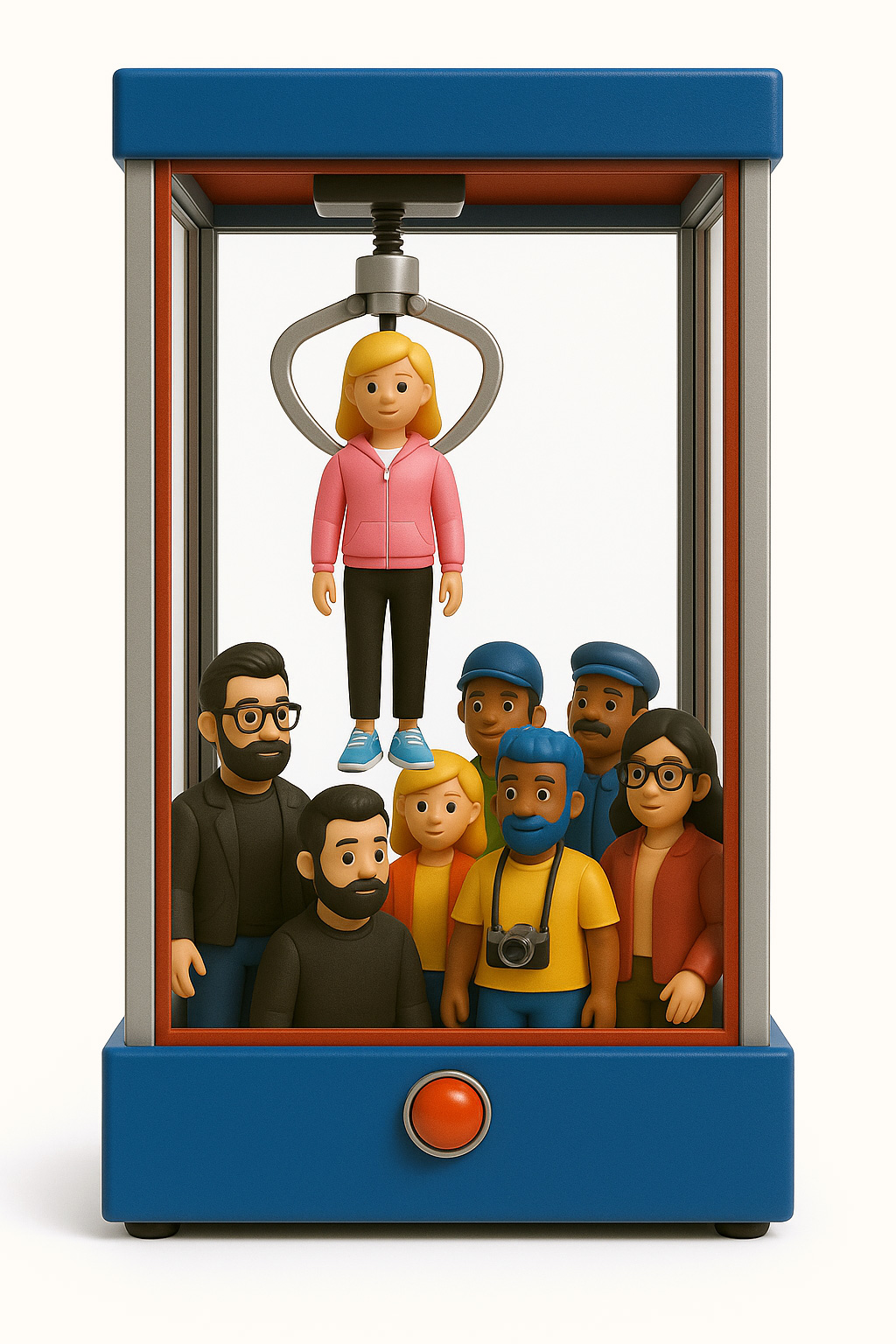
The overcapacity dilemma: High costs during low demand
Every agency leader knows the scenario: you staff up for a big project or a growth phase, only to hit a slow period where those talented designers, copywriters, and developers aren’t fully booked. Yet the paychecks, benefits, and software licenses still go out like clockwork. Idle talent on payroll means idle money. In fact, in-house creative teams incur massive fixed costs, and they get paid even during project lulls. This can drain an agency’s finances during downturns or between client campaigns.
This isn’t a rare story. During economic slowdowns, executives increasingly question whether an in-house creative team is cost-effective or a luxury. As one industry report noted, a tough business climate coupled with outsourcing trends has put pressure on creative leaders to justify their existence – executives want to know if it’s cheaper to keep work in-house or outsource it. In other words, the old model of large in-house teams is being scrutinized. Agencies that carry high fixed staffing costs through the year are vulnerable when client spend falters.
From fixed costs to flexible scaling: Embracing external partnerships
What’s the alternative? Converting those fixed costs into flexible, on-demand resources. This is where smart outsourcing or external partnerships come into play. Instead of employing a large full-time production team that must be paid regardless of workload, agencies can maintain a lean core team and tap external specialists as needed. You only pay for what you need, when you need it – no salaries during quiet periods, no bloated overhead.
Think of it as turning your creative department into a “variable cost” model. One analysis put it plainly: outsourcing converts fixed costs into variable costs, freeing up capital and shedding the weight of excess overhead. You’re not carrying the cost of 10 designers in slow months; you’re scaling expenses up and down in sync with actual project revenue. This can be a game-changer for profitability. In fact, companies that leverage offshore creative production have seen huge cost savings – up to 70% savings in some cases by tapping talent in cost-effective regions. While your agency’s situation might differ, the core idea is universal: smart outsourcing can dramatically lower the cost base.
Importantly, outsourcing doesn’t mean sacrificing quality or control. It’s about being strategic: identify which tasks are core to keep in-house and which are better handled externally. Routine production design, video editing, banner resizes, web development – these can be executed by a specialized external team at a lower cost, while your in-house creatives focus on high-level concepting and client-facing strategy. As industry experts advise, it’s wise to own the creative strategy and client relationship internally, and outsource the executional or production-heavy tasks that don’t require your immediate oversight. By doing so, you maintain your agency’s creative vision and quality standards, but achieve it with a leaner internal team.
Preserving quality while freeing up your core team
A common concern is, “Will outsourcing lower our quality? Our clients hire us for our creative excellence.” The key is choosing the right partner and using them in the right way. A good external creative production partner becomes an extension of your team, not a replacement. They bring specialized expertise (often having designers, animators, developers who are experts in their niches) that can match your quality requirements or even enhance them. In fact, outsourcing gives you access to a pool of highly skilled specialists on demand – talent you might not afford to keep on payroll year-round, but can utilize for specific projects.
By delegating executional work outward, your internal team is freed up to focus on strategic, high-value activities. Instead of your senior art director spending days cranking out dozens of ad variants or tweaking HTML code, they can concentrate on big creative ideas, campaign strategy, and maintaining client relationships. Your account managers and creative leads can devote more energy to understanding client needs and crafting solutions, rather than managing the minutiae of production. This not only preserves quality (because the in-house team still guides the vision), but often improves morale and retention – your top talent stays engaged with the work that excites them, not monotonous production tasks.
In essence, outsourcing when done right can preserve quality – even enhance it – because you’re leveraging specialists and preventing your own team from stretching too thin. It also gives you fresh perspectives; external creatives might contribute ideas or techniques your team hadn’t considered, leading to more innovative solutions. The crucial part is treating the external partner as part of the process: clear briefs, good communication, and alignment on brand guidelines ensure the work matches your standards. Many agencies find that after an adjustment period, an external partner can mimic their style and quality requirements so well that end-clients don’t notice (nor need to know) that some production work was outsourced.


Measurable benefits: Speed, flexibility, and better margins
Why are more agencies embracing this hybrid model? Because it translates to real, measurable benefits on multiple fronts:
Lower overhead & better margins
By reducing fixed salaries and office costs, agencies can significantly cut expenses. Every euro not spent on an idle employee is an euro added to your profit margin (or freed up to invest elsewhere). As one outsourcing expert summarized, this approach controls overhead costs and drives up profit margins for agencies. You’re no longer paying for downtime or carrying excess staff “just in case” – that efficiency goes straight to the bottom line.
Flexible resourcing
Need five extra motion graphic designers for a two-month project? With an external partner, you can scale up instantly, then scale down when the project is over – without any hiring or layoffs. Outsourcing provides the agility to upscale or downscale rapidly with business needs. This flexibility means you can respond to new client opportunities or market changes without the usual lag of recruiting or the risk of being overstaffed later. In practice, your agency becomes much more resilient. Peaks and valleys in workload are no longer a profitability crisis; they’re manageable through flexible staffing.
Faster time-to-market
Focus on core strategy
As discussed, handing off production-heavy tasks lets your core team focus on what your agency truly uniquely offers – strategic thinking, client service, and creative direction. This not only improves the quality of those strategic outputs, but also can increase client satisfaction (they get more attention and higher-level value from your key people). One industry survey found that by outsourcing certain functions, companies enabled their internal teams to concentrate on core competencies, leading to improved productivity and business outcomes. In an agency context, that could mean your internal team has more bandwidth to come up with that award-winning campaign idea or to nurture client relationships, while the partner handles the executional work to bring those ideas to life.
Scalability without stress
When growth opportunities arise, a flexible partner model means you don’t have to panic about hiring fast enough or overloading your current team. You can take on larger projects or more clients by leveraging external capacity. Conversely, if the market contracts, you aren’t forced into painful layoffs – you simply dial back external usage. This kind of scalability gives agency leaders peace of mind. You can grow confidently, knowing your cost base is largely variable and can adjust with demand. It’s a buffer against economic uncertainty: fixed costs are minimized, so downturns are less devastating and upturns are fully capitalized on.
To put numbers to it, consider the overhead difference: an in-house creative employee isn’t just salary; it’s also health benefits, office space, equipment, training, and paid time off. All of that is largely eliminated when you outsource that role. Instead, you pay a project fee or a retainer to your external partner. If work slows down, you pay less that month – simple as that. If work spikes, you pay more but it’s directly tied to revenue-generating projects. This alignment of costs with revenue greatly improves profitability. It’s no wonder that agencies who embrace this model often see improvements in their gross profit margins once they right-size their in-house team and shift other production costs to an as-needed basis.
Choosing the right partner
Shifting to an external-partner model is a strategic move. It’s important to choose a partner that fits your agency’s needs and culture. You’ll want reliable quality, efficient turnaround, scalability, and cost-effectiveness. The ideal partner feels like a seamless extension of your own team – they should understand your brand tone, your processes, and your standards, with open lines of communication. When evaluating options, consider their track record with agencies, the range of skills they offer, their flexibility in engagement (project-based, retainer, etc.), and of course pricing structures that make sense for you.
There are a number of creative outsourcing firms and platforms out there, ranging from large-scale providers to specialized studios. Growthcast is one example of a partner geared toward agencies looking for exactly this kind of solution. We position ourselve as “more cost-effective than hiring freelancers or building an in-house team,” with a credit-based model to optimize budgets. In practice, a partner like Growthcast can enable you to “scale faster” – skipping lengthy hiring processes and getting projects done with a ready-made team – and “launch quickly” by accelerating production timelines. All of this comes while “saving more” by cutting production costs without compromising quality.
Of course, Growthcast is just one example to illustrate the kind of capabilities available. The key is that such partners offer flexible service plans, on-demand talent, and dedicated project managers who handle the workflow, so your team doesn’t have to micromanage external creatives. They integrate with your way of working. For agency executives, this means you’re not losing control – you’re gaining a scalable extension of your team that can be turned on or off as needed. And because many of these partners work with multiple clients, their efficiency and economies of scale become your benefit (hence the lower cost). It’s a strategic partnership, not a simple vendor transaction. When done right, your clients will receive the same quality and creativity they expect, delivered faster and often at a better cost structure for you.
Embracing a strategic shift without the hard sell
If all this sounds like a significant change in how you operate, it is – but it’s a change many forward-thinking agencies are making to stay competitive and financially healthy. The goal isn’t to simply cut costs; it’s to restructure costs in a smarter way that also improves your service delivery. By reducing continuous staffing costs and utilizing external talent wisely, you create an agency that’s nimble, resilient, and primed for profitability.
What’s crucial is to communicate this shift internally as well: reassure your core team that outsourcing production work isn’t a threat to their jobs, but rather a strategy to ensure the agency’s longevity (and to make their jobs better by letting them focus on what they do best). Culturally, the conversation shifts from “outsourcing vs. in-house” to “core vs. context” – we keep the core creative thinking in-house and outsource the contextual execution work. It’s a model that even large corporations have used for years (maintaining an in-house team for key initiatives and using outside firms for overflow or specialized needs). Now agencies are applying the same wisdom to their own business model.
In summary, moving from a fully in-house creative team to a blended approach with an external partner is a strategic move to weather economic pressures and optimize operations. It’s about running a leaner, more scalable agency without sacrificing the creative spark that clients come for. Agencies that adopt this approach are finding they can bring ideas to market faster, flex their resources without drama, and improve their margins – all while delivering top-notch creative work. It’s a win-win: clients get quality and speed, and the agency gets efficiency and profitability.
As you consider the road ahead for your agency, it’s worth evaluating which parts of your creative and digital production truly need to live in-house and which could be handled by a trusted external team. You might discover that by trimming the full-time team to a strategic core and partnering for production, you gain not only cost savings, but also a newfound agility in responding to client needs. In uncertain economic times, that agility can make the difference between merely surviving and confidently growing.